

I still remember the first time I sat on a train as a kid — the rhythmic sound of the wheels, the whistle echoing across the platform, and that feeling of curiosity every time I saw people in crisp uniforms checking tickets or managing passengers with calm authority.
Back then, I didn’t know what the Indian Railways really meant for our country. But as I grew up, I realized it wasn’t just a transport system. It was one of India’s biggest employers, a symbol of stability, discipline, and national pride.
Over the years, I’ve met many people who built their entire careers in the Indian Railways — some started as ticket collectors or loco pilots, others as engineers or clerks. Each one had a story of hard work, steady progress, and immense pride in serving the nation.
If you too are looking to build a rewarding career in Indian Railways, this guide will walk you through everything — from eligibility and exams to career growth and preparation tips.
Build a Career in Indian Railways: RRB Exams, Eligibility & Growth Path
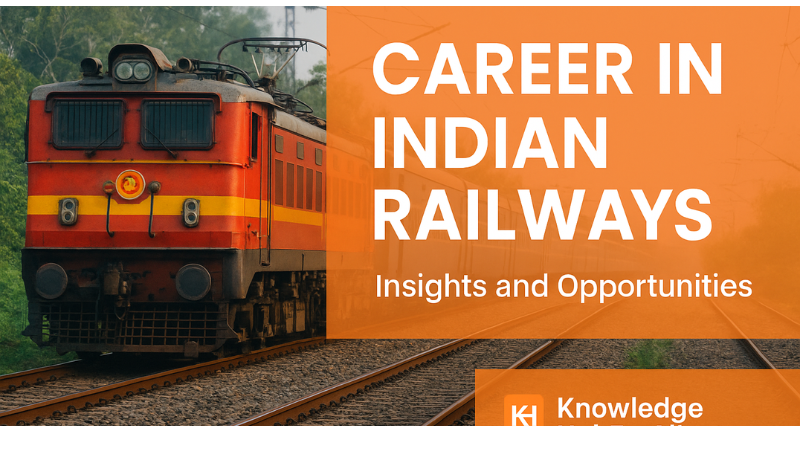
Why Choose a Career in Indian Railways?
Before diving into exams and eligibility, it’s important to understand why so many aspirants aim for the railways every year.
1. Job Security
Once you join the railways, you are part of a system that rarely lays off employees. It’s one of the most secure government jobs in India.
2. Salary & Perks
With the implementation of the 7th Pay Commission, railway employees enjoy handsome salaries, DA (Dearness Allowance), HRA (House Rent Allowance), and various travel concessions.
3. Work-Life Balance
Most railway jobs offer fixed working hours, paid leaves, and family benefits — a huge advantage compared to private sector jobs.
4. Opportunities Across India
Whether you’re from a metro or a small town, you can get posted in different parts of India — a chance to explore and grow.
5. Pride & Social Status
Railway jobs command immense respect in society. Wearing that badge and uniform feels like being part of something greater than yourself.
Understanding the Railway Recruitment System
Indian Railways is divided into different zones and departments, each managed by the Railway Recruitment Board (RRB) or Railway Recruitment Cell (RRC).
There are 21 RRBs across India — for example, RRB Kolkata, RRB Chennai, RRB Mumbai, RRB Allahabad, and so on. Each RRB conducts exams for various posts under its jurisdiction.
Broadly, the Indian Railways recruits candidates in four main groups:
| Group | Category | Education Required | Examples of Posts |
|---|---|---|---|
| Group A | Gazetted Officers | Graduation + UPSC Exam | IRAS, IRTS, IRSE |
| Group B | Promotion from Group C | – | Section Officers |
| Group C | Non-Gazetted (RRB Exams) | 10th / 12th / Diploma / Graduate | ALP, Technician, Clerk, Station Master |
| Group D | Entry-Level (RRC Exams) | 10th Pass / ITI | Track Maintainer, Helper, Porter |
Types of RRB Exams: Choosing the Right One
Different exams are conducted for various positions. Let’s look at the most popular RRB exams that candidates prepare for:
1. RRB NTPC (Non-Technical Popular Categories)
Eligibility: 12th Pass or Graduate (depending on post)
Age Limit: 18–33 years (relaxation for reserved categories)
Popular Posts:
- Junior Clerk cum Typist
- Station Master
- Goods Guard
- Commercial Apprentice
- Accounts Clerk
Selection Process:
- CBT (Computer Based Test) Stage 1
- CBT Stage 2
- Typing/Skill Test (for certain posts)
- Document Verification
- Medical Test
Why Choose NTPC:
If you’re looking for an office-based, stable job with growth potential and decent work hours, NTPC is perfect.
2. RRB Group D
Eligibility: 10th Pass / ITI
Age Limit: 18–33 years
Popular Posts:
- Track Maintainer Grade IV
- Helper / Assistant
- Porter / Gateman
Selection Process:
- CBT
- Physical Efficiency Test (PET)
- Document Verification
- Medical Examination
Why Choose Group D:
This is a great entry point for those starting their career early. With experience and internal exams, you can move up to Group C posts.
3. RRB ALP (Assistant Loco Pilot) and Technician
Eligibility: ITI / Diploma in Engineering
Age Limit: 18–30 years
Popular Posts:
- Assistant Loco Pilot (ALP)
- Technician Grade III
Selection Process:
- CBT Stage 1
- CBT Stage 2 (Technical)
- Computer-Based Aptitude Test (for ALP)
- Document Verification & Medical Test
Why Choose ALP:
If you love trains and dream of being in the driver’s seat, this is for you. ALPs play a key role in train operations and can be promoted to Loco Pilot, then Senior Pilot.
4. RRB JE (Junior Engineer)
Eligibility: Diploma or Degree in Engineering
Age Limit: 18–33 years
Popular Posts:
- Junior Engineer (Electrical, Civil, Mechanical)
- Depot Material Superintendent (DMS)
- Chemical & Metallurgical Assistant
Selection Process:
- CBT Stage 1
- CBT Stage 2
- Document Verification & Medical Test
Why Choose JE:
Ideal for candidates with a technical background who want to work in engineering departments of railways.
RRB Exam Syllabus and Preparation Strategy
Let’s simplify what you need to study for most RRB exams:
Common Subjects:
- Mathematics: Percentages, Profit & Loss, Time-Speed-Distance, Ratio, Geometry
- General Intelligence & Reasoning: Puzzles, Coding-Decoding, Series, Analogies
- General Awareness: Current Affairs, Indian Railways, History, Polity, Economy
- Science (for Technical Posts): Physics, Chemistry, Basics of Electrical/Mechanical
Preparation Tips:
- Understand the Exam Pattern:
Go through the previous year papers and cut-offs to know what to expect. - Stick to Reliable Books:
- Quantitative Aptitude by R.S. Aggarwal
- Lucent’s General Knowledge
- Reasoning by Arihant Publications
- Current Affairs from online portals or apps
- Mock Tests Are Key:
Practice online mock tests regularly to improve your speed and accuracy. - Revise Short Notes:
Make brief notes of formulas, facts, and key topics to revise daily. - Stay Consistent:
Even 2–3 hours of daily study, if done sincerely, can yield great results.
Eligibility Criteria
Each post has slightly different eligibility criteria, but here’s a general overview:
| Post Type | Minimum Qualification | Age Limit | Additional Requirements |
|---|---|---|---|
| RRB NTPC | 12th / Graduate | 18–33 yrs | Typing Skill (for some) |
| RRB ALP | ITI / Diploma | 18–30 yrs | Vision standards required |
| RRB JE | Diploma / Degree | 18–33 yrs | Technical knowledge |
| RRB Group D | 10th / ITI | 18–33 yrs | Physical fitness for PET |
Age Relaxation:
- OBC: +3 years
- SC/ST: +5 years
- Ex-Servicemen, PwD, and others have additional relaxations as per rules.
How to Apply for RRB Exams
- Visit Official Website:
Each RRB has its own site (e.g., RRB Chennai). - Check Notification:
Read the full notification carefully before applying. - Fill Application Form:
Provide correct details, upload documents, and pay the online fee. - Download Admit Card:
It’s usually released 10–15 days before the exam. - Appear for CBT:
Exams are computer-based and held in multiple shifts across India.
Career Growth in Indian Railways
Your growth in railways doesn’t stop once you’re recruited. Promotions happen through seniority, departmental exams, and performance. Let’s look at some growth paths.
For RRB NTPC (Station Master Path):
Assistant Station Master → Station Master → Station Superintendent → Chief Station Superintendent → Divisional Operations Manager
For RRB ALP:
Assistant Loco Pilot → Loco Pilot → Senior Loco Pilot → Power Controller → Chief Loco Inspector
For RRB JE:
Junior Engineer → Senior Section Engineer → Assistant Divisional Engineer → Divisional Engineer → Senior Divisional Engineer
For Group D Staff:
Track Maintainer → Keyman → Junior Engineer (via departmental exam)
Tip: Always keep an eye on internal promotion circulars. Railways value experience and loyalty.
Life in Indian Railways
Railway employees often describe their job as a “family in motion.” Whether you’re a ticket examiner on a train or an engineer maintaining tracks in remote areas, you’re contributing to a system that keeps India moving.
There’s pride in seeing the train you helped dispatch arrive safely miles away. You meet new people every day, witness diverse cultures, and gain lifelong friendships.
But yes, it also has challenges — sometimes irregular hours, transfers, or working in difficult climates. Still, for most, the satisfaction of serving the nation makes it all worth it.
How to Stay Motivated During Preparation
I’ll be honest — preparing for RRB exams isn’t easy. The competition is huge. Sometimes you might feel tired or lose motivation.
Here are a few things that helped me stay focused:
- Set small goals: Don’t think about cracking the exam in one go. Focus on clearing one topic a day.
- Join a study group: Online Telegram or WhatsApp groups for RRB aspirants can keep you updated.
- Watch success stories: Listening to real candidates who cleared the exam boosts confidence.
- Take breaks: Rest and recharge. A fresh mind learns faster.
Top Zones and Posts to Target
Some RRB zones are more popular due to better facilities and city life.
Top Choices Among Candidates:
- RRB Mumbai
- RRB Chennai
- RRB Kolkata
- RRB Secunderabad
- RRB Allahabad
In-demand Posts:
- Station Master
- Goods Guard
- Junior Engineer
- Commercial Apprentice
- Loco Pilot
Each post has its unique charm — whether it’s operating trains, managing passengers, or maintaining infrastructure.
Salary Structure Overview (After 7th Pay Commission)
| Post | Pay Level | Basic Pay (Approx.) | In-Hand Salary Range |
|---|---|---|---|
| Station Master | Level 6 | ₹35,400 | ₹50,000–₹60,000 |
| Junior Engineer | Level 6 | ₹35,400 | ₹48,000–₹55,000 |
| ALP | Level 2 | ₹19,900 | ₹25,000–₹35,000 |
| Technician | Level 2 | ₹19,900 | ₹25,000–₹33,000 |
| Group D | Level 1 | ₹18,000 | ₹22,000–₹28,000 |
Additional benefits include free travel passes, medical facilities, pension (under NPS), and bonuses.
Final Thoughts on Build a Career in Indian Railways: RRB Exams, Eligibility & Growth Path: Your Track to Success
A career in the Indian Railways isn’t just about earning a salary — it’s about being part of a legacy. Every day, you help millions reach their destinations safely. You become a part of the lifeline of India.
If you’re preparing for RRB exams, don’t see it as a race — see it as a journey. Stay disciplined, stay humble, and believe in your effort. Because the train of opportunity doesn’t stop for long — once you’re ready, hop on and make your journey count.
Related:-
Olympiad Exam 2025 A Complete Guide for Students
How to Build a Successful Career in Hotel Management After 12th
All Law Programs That Can Launch Your Legal Career
The Indian Certificate of Secondary Education (ICSE): Complete Guide 2025
CUET 2025 Complete Guide to Exam Dates, Syllabus and Preparation Tips
Frequently Asked Questions
What is the Railway Recruitment Board (RRB)?
The RRB is an organization under the Government of India that conducts exams to recruit candidates for various technical and non-technical posts in Indian Railways. There are 21 RRBs across the country, such as RRB Chennai, RRB Kolkata, and RRB Mumbai.
What are the main exams conducted by RRB?
The major RRB exams include:
- RRB NTPC (Non-Technical Popular Categories)
- RRB Group D
- RRB ALP (Assistant Loco Pilot) and Technician
- RRB JE (Junior Engineer)
Each exam targets different educational levels and job categories.
Who is eligible to apply for RRB exams?
Eligibility varies by post:
- Group D: 10th Pass / ITI
- NTPC: 12th Pass or Graduate
- ALP & Technician: ITI / Diploma in Engineering
- JE: Diploma or Degree in Engineering
Age limits generally range from 18 to 33 years, with relaxations for reserved categories.
How often are RRB exams conducted?
There is no fixed schedule, but major RRB exams are usually announced once every 1–2 years, depending on vacancies. Always check the official RRB website for the latest updates.
How can I apply for RRB exams?
You can apply online through the official website of your respective RRB. Fill in your details, upload documents, pay the fee, and submit your application before the deadline.
What is the salary of a railway employee?
Salaries depend on the post and pay level. For example:
Group D Staff: ₹22,000–₹28,000 per month
All employees also get allowances, free train passes, medical benefits, and pension under NPS.
Station Master / JE: ₹35,000–₹60,000 per month
ALP / Technician: ₹25,000–₹35,000 per month
Is it difficult to crack RRB exams?
RRB exams are competitive, but not impossible. With a clear understanding of the syllabus, regular practice, and good time management, many candidates clear them in their first or second attempt.
What are the promotion opportunities in Indian Railways?
Railway employees have steady promotion opportunities. For instance, a Junior Clerk can become a Chief Clerk, and an Assistant Loco Pilot can rise to Senior Loco Pilot or Power Controller. Promotions are based on seniority, experience, and departmental exams.
Is coaching necessary to prepare for RRB exams?
Not necessarily. Many aspirants clear exams through self-study using standard books, online resources, and mock tests. However, coaching can help if you prefer structured guidance.
Which RRB zone is best to apply for?
All RRBs are equally good, but popular zones like Mumbai, Chennai, Allahabad, and Secunderabad often have more vacancies and better infrastructure. You can apply for any zone depending on your location preference.




Pingback: Top 20 Scholarship Exams for Graduation Students in India
Thank you for another informative web site. Where else may I get that type of info written in such a perfect approach? I have a undertaking that I am simply now working on, and I have been on the glance out for such information.