Studying abroad doesn’t have to bankrupt your family if you choose the right destination. For many middle-class Indian families, the “study abroad dream” (विदेशी पढ़ाई का सपना) often crashes when they see the ₹40–50 Lakh price tags of universities in the US, UK, or Canada.
However, there is a smart alternative: Europe’s public university system. It is important to note that “Free Education” usually means 100% tuition waivers, but you must still manage living expenses (Kharcha).
While choosing a tuition-free country saves money, applying at the wrong time can cost you an entire year. To ensure you don’t miss university intakes, check our detailed guide on the Study Abroad in 2025: Complete Roadmap for Indian Students [Timeline + Checklist].
Unlike other outdated guides, this post reflects the critical 2025-2026 policy changes, including the new fees in Norway and the tuition introduction in Bavaria, Germany.
Where Can Indian Students Study for Free?
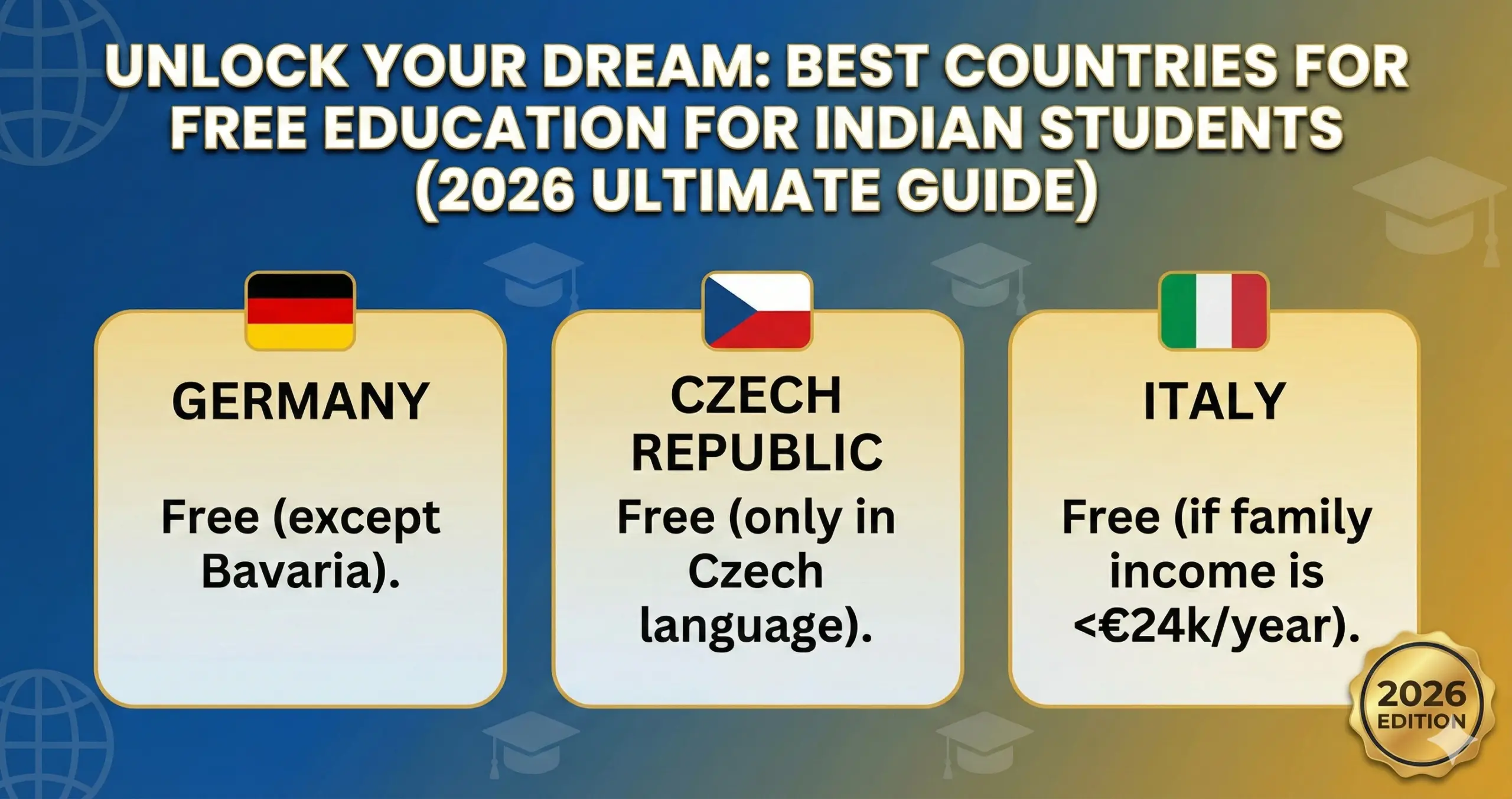
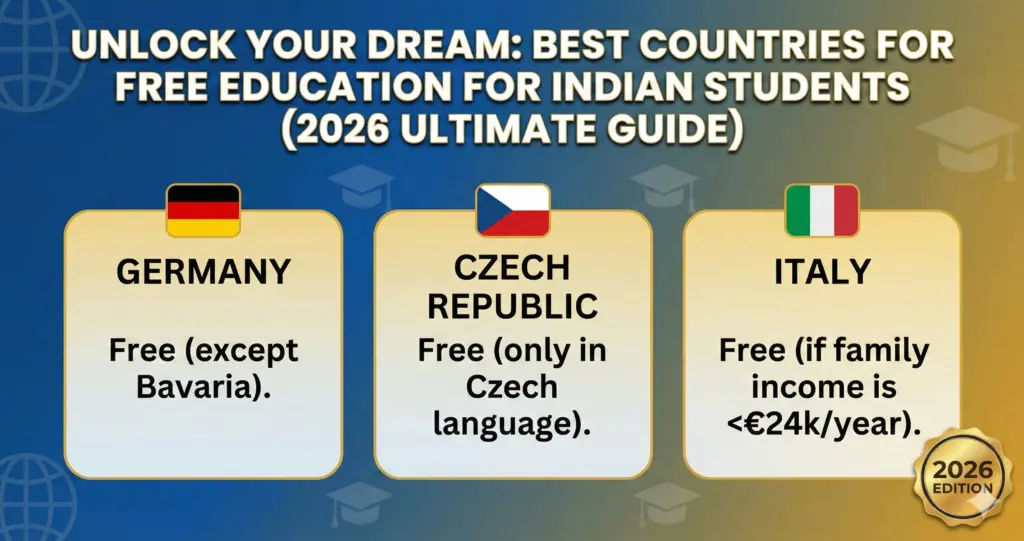
If you are looking for 100% tuition waivers in 2026, focus on these three countries:
- 🇩🇪 Germany: Free (except Bavaria).
- 🇨🇿 Czech Republic: Free (only in Czech language).
- 🇮🇹 Italy: Free (if family income is <€24k/year).
Note: Norway is now paid. “Free” refers to tuition only; you still need ₹10-12 Lakhs annually for living expenses.
As of 2026, Germany (excluding Bavaria) and the Czech Republic (for Czech-taught courses) remain the top destinations offering 100% tuition-free education for Indian students at public universities. Italy provides full tuition waivers and stipends based on family income (ISEE), while Austria charges nominal fees (~€726/semester). Important Update: Norway is no longer tuition-free for non-EU students. Students must budget for living costs and mandatory Blocked Accounts (e.g., ~€11,208/year for Germany).
Unlock Your Dream: Best Countries for Free Education for Indian Students (2026 Ultimate Guide)
What Does “Free Education” Actually Mean?
Understanding the fine print behind “free education” is crucial to avoid financial shock later. While the government subsidizes your academic fees, “free” rarely means zero cost.
Tuition-Free vs. Semester Contributions
Even in tuition-free countries, you are legally required to pay a “Semester Contribution.”
- What it covers: Administrative costs, student union fees, and often a Semester Ticket (free public transport in the region).
- Cost: Usually between €200 and €400 per semester (approx. ₹18,000–₹36,000 INR).
- Reality Check: You aren’t paying for classes, but you are paying to keep the university running.
The “Blocked Account” Reality
Demonstrating financial solvency is the single biggest hurdle for Indian parents.
- The Rule: Countries like Germany require you to deposit a specific amount in a “Blocked Account” (Sperrkonto) before your visa is approved.
- The Amount: As of 2026, this is approximately €11,208 per year (approx. ₹10 Lakhs INR).
- The Withdrawal: You get this money back in monthly installments to cover your rent and food.
“Is the blocked account money fees?” No. It is your own money for your living expenses (Rent + Food). You get it back monthly.
Hidden Costs
Furthermore, you must account for initial setup costs that scholarships don’t cover.
- Health Insurance: Mandatory ~€110/month.
- Residence Permit Fees: ~€100 one-time.
- Airfare: ₹40,000–₹60,000 INR.
Eligibility Criteria for Free Education (For Indians)
Meeting the specific academic and financial prerequisites is the first step toward securing your seat. European public universities are bureaucratic and strict about their rules.
- Academic (The 13-Year Rule): In Germany, a standard Indian Class 12 certificate is often not enough for direct bachelor’s admission. You may need to complete Studienkolleg (a foundation year) or one year of bachelor’s in India to match their 13-year education system.
- Language Proficiency: While Master’s degrees are often in English, Bachelor’s degrees usually require German (C1) or the local language.
- Financial Proof: You must show “Liquidity” (Cash in bank), not just “Solvency” (Assets like house/land).

🇩🇪 Missing the “13th Year” for Germany?
Most Indian students get rejected because they lack the 13th year of education. Studienkolleg is your mandatory bridge to free public universities.
- ✅ Passing the tough Aufnahmeprüfung (Entry Test)
- ✅ List of Public Studienkollegs (Tuition-Free)
- ✅ Step-by-step application blueprint
*Recommended Resource. Contains affiliate links at no extra cost to you.
Top Countries for Free (or Near-Free) Education in 2026
1. Germany – The #1 Choice
Germany remains the powerhouse of engineering and technology education, offering the highest ROI.
- Tuition Status: 100% Free in Public Universities (except in the state of Bavaria).
- Crucial Update (Bavaria): Universities in Bavaria (like TUM – Technical University of Munich) now charge tuition fees for non-EU students, ranging from €2,000 to €6,000 per semester.
- Post-Study Work Visa: 18 months to find a job.
- Best For: Mechanical, Automotive, and IT students.
Can I study in Germany without knowing German? Yes, for Master’s degrees, many courses are in English. However, for Bachelor’s degrees, English courses are rare, and learning German is highly recommended for daily life and part-time jobs.
2. Italy – Best for Low-Income Students (ISEE)
Italy is a hidden gem that actually pays students to study there if their family income is low.
- The “ISEE” System: Tuition fees are calculated based on family income. If your family earns less than roughly €23,000/year (which covers many Indian families), your tuition is €0.
- Regional Scholarships (DSU): If eligible, you get free tuition + free hostel/canteen + a cash stipend of €6,000–€7,000 per year.
- Best For: Architecture, Design, Fashion, and Medicine.
3. Czech Republic – Free if You Learn the Language
The Czech Republic offers high-quality education in the heart of Europe with a low cost of living.
- The Rule: Education is 100% Free if you study in the Czech Language.
- English Courses: Available but paid (ranges from €2,000–€5,000/year).
- Pathway: Many students take a 1-year intensive language prep course before starting university.
- Best For: Engineering and Medicine.

🗣️ Don’t Let Language Be a Barrier
Want 100% free tuition in Germany or Czech Republic? You usually need B2/C1 level proficiency. Start practicing 10 minutes a day to clear your visa interview.
- ✅ Learn German, French, or Czech for real-life situations.
- ✅ Personalized study plans that fit your schedule.
*Includes free lessons. Affiliate link.
4. Austria – High Quality, Ultra-Low Fees
Austria offers a standard of living comparable to Switzerland but at a fraction of the education cost.
- Cost: Not zero, but very low. Approx €726 per semester (~₹65,000 INR).
- Requirement: Strict admission rules; often requires you to have passed the JEE Advanced or have admission in an Indian university to qualify.
- Best For: Music, Arts, and Technical Sciences.
5. France – The “Fee Waiver” Route
France has a complex system, but smart planning can make it affordable.
- Fee Structure: Standard fees for non-EU students were hiked to €2,770/year.
- The Loophole: Many public universities offer partial or full fee waivers, bringing the cost back down to ~€170/year (same as EU students). You must apply for this specifically.
- Best For: Management (Grandes Écoles are paid), Fashion, and Nuclear Physics.
6. Iceland – Truly Free but Expensive Living
Iceland charges zero tuition fees at public universities, only a registration fee.
- The Catch: The cost of living is one of the highest in the world.
- Registration Fee: ~€500/year.
- Warning: Rent and food can easily cross €1,500/month.
- Best For: Geosciences and Renewable Energy.
Tuition, Living Costs & Language
| Country | Tuition Fee (Public) | Monthly Living Cost (INR) | English Course Availability | Best For |
| Germany | €0 (Except Bavaria) | ₹80k – ₹95k | High (Masters) | Engineering, IT |
| Italy | €0 (Income-based) | ₹60k – ₹80k | Medium | Design, Architecture |
| Austria | ~€726 / sem | ₹80k – ₹1.1L | Low (Bachelor) | Arts, Music |
| Czech Rep. | €0 (In Czech) | ₹50k – ₹70k | Low | Medicine, Tech |
| France | €170 – €2,770/yr | ₹70k – ₹1L | High | Business, Fashion |
The “Scholarship Route” (Countries that are NOT Free but Fundable)
Some countries have recently stopped free education for Indians, but they offer scholarships that cover everything.
Norway & Finland
Significantly, Norway and Finland are no longer free for Indian students.
- Norway Fees: Now charges approx NOK 130,000+ per year (~₹10 Lakhs).
- Finland: Has charged fees for years.
- Solution: You must secure high-value scholarships like Erasmus Mundus or University-specific waivers to study here affordably.
Hungary (Stipendium Hungaricum)
This is a fully funded government scholarship program.
- Benefits: Covers Full Tuition + Accommodation + Medical Insurance + Monthly Stipend.
- Competition: Highly competitive, managed through the Indian Ministry of Education.
Step-by-Step Application Process for Indian Students
Navigating the bureaucracy requires a systematic approach, starting well before admission deadlines.
- Step 1: APS Certificate (Mandatory for Germany/Austria): This verifies your Indian degree is genuine. Apply for this 6 months in advance.
- Step 2: Language Certifications: Clear your IELTS/TOEFL for English or Goethe/TestDaF for German.
- Step 3: The Uni-Assist Portal: Most German universities use this “Single Window System” for applications.
- Step 4: Visa & Blocked Account Setup: Open an Expatrio or Coracle account to deposit your living funds.
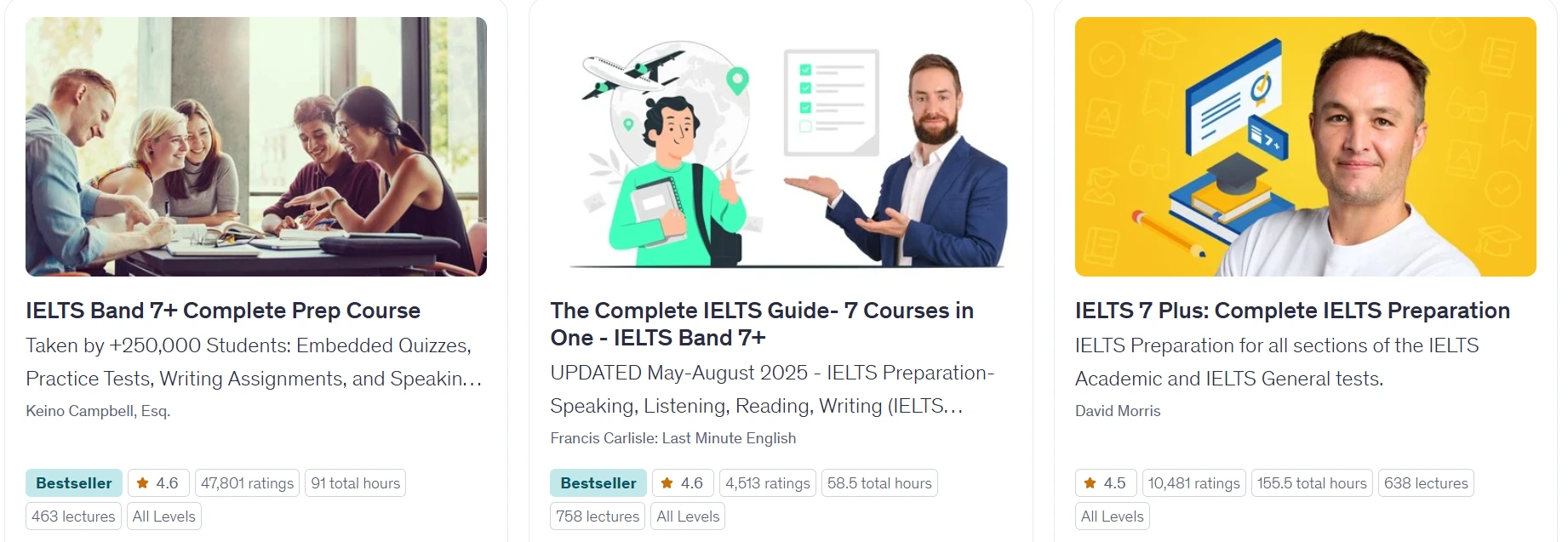
🎓 Struggling to Hit Band 7.0+?
Most German universities require a solid IELTS score. Don’t risk a visa rejection. Master the strategies to clear Academic or General IELTS in one go.
What you’ll master:- ✅ Complete strategies for Reading, Writing, Listening & Speaking.
- ✅ How to structure Task 1 & Task 2 essays perfectly.
- ✅ Achieve the exact Band Score needed for your target university.
*Highly recommended course. Affiliate link.
💡 Want to impress German Professors?
Admission to free universities often depends on a strong research proposal. Don’t just Google—use academic tools.
👉 Learn the Skill:
How Indian Students Can Use Google Scholar for Study Abroad Research Projects
Pros and Cons of Tuition-Free Countries
Weighing the benefits against the challenges ensures you make an informed decision.
Pros (The Good Stuff)
- Zero Debt: You graduate without a massive education loan.
- Schengen Access: Travel to 27+ countries visa-free.
- High ROI: Earning in Euros after paying zero tuition results in massive savings.
Cons (The Struggle)
- Language Barrier: Daily life (Grocery, Banking) happens in German/Italian/French.
- Bureaucracy: Paperwork is slow and strictly offline in many cases.
- Longer Duration: Bachelors can take 3.5 to 4 years; exams are tough.
🌍 Still Undecided?
Free education is great, but sometimes paid destinations (like UK or USA) offer faster career growth. Compare all your options in one place.
👉 Read the Master Guide:
Best Countries for Indian Students to Study Abroad in 2025: A Global Guide
Final Verdict On Best Countries for Free Education for Indian Students : Which Country is Right for You?
Choosing the right country depends entirely on your field of study and budget elasticity.
- For Engineers: Germany is the undisputed king.
- For Arts/Design/Low Budget: Italy offers the best scholarships (DSU).
- For Medical: Czech Republic or Hungary (via Scholarship) are excellent.
Ultimately, the “free” tag requires hard work in learning a new language and managing finances smartly.
What is your biggest concern about studying abroad—Funding or Language? Let me know in the comments below! 👇
Ready to build your roadmap? Don’t wait for the industry to leave you behind. Equip yourself with the right tools today. For more insights on specific courses, certifications, and detailed salary breakdowns, visit Knowledge Hub For All’s Guide on Future-Proof Skills.
Frequently Asked Questions
-
Germany (excluding Bavaria), Czech Republic (in Czech language), Iceland, and Italy (via scholarships) are the top options.
-
No. As of 2023-24, Norway introduced tuition fees for non-EU/EEA students.
-
For Germany, the requirement (as of 2025-26 trends) is approximately €11,208 (INR-1,188,881.87)per year.
📄 Is Your Resume “European Standard”?
European professors reject generic resumes. You need a CV that highlights research, projects, and skills—not just grades.
Join 4+ Million people using VisualCV to create professional, ATS-friendly resumes that pass the admission screening.
- ✅ Job-Ready & Academic Templates (Europass style).
- ✅ Create a professional CV in minutes.
- ✅ Trusted by top professionals worldwide.
*Essential for university applications. Affiliate link.


![Study Abroad in 2025: Complete Roadmap for Indian Students [Timeline + Checklist]](https://knowledgehubforall.com/wp-content/uploads/2025/08/study-abroad-in-2025_-complete-roadmap-for-indian-students-timeline-checklist-2-scaled-200x100.jpg)