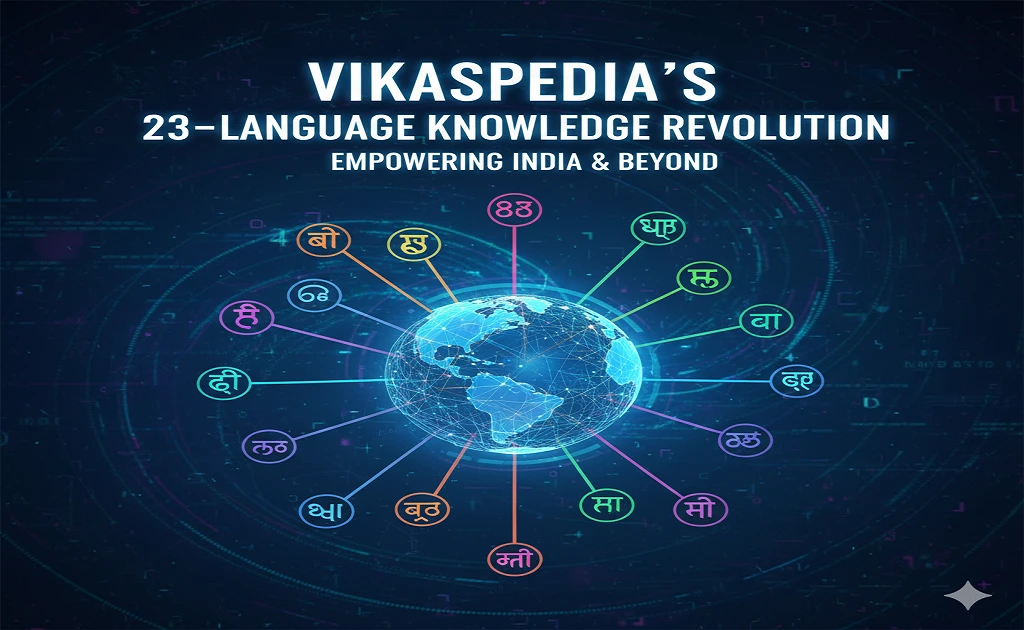
Vikaspedia in 23 languages is transforming digital inclusion across India.
It gives citizens access to verified, government-backed information in the languages they actually understand, removing English dependency and making digital knowledge accessible to everyone.
This multilingual model empowers rural users with practical resources they can actually use.
From agriculture and health to education and welfare schemes, Vikaspedia offers locally relevant content, examples, and guides that support day-to-day decision-making.
Its 23-language ecosystem is now a major driver of India’s accessibility revolution.
By strengthening digital literacy and supporting government initiatives, it helps communities become informed, confident, and digitally independent.What Are Digital Skills? A Beginner’s Guide for Students and Professionals
Why does “The 23-Language Revolution matter in today’s digital landscape?“
This topic matters because Vikaspedia in 23 languages directly solves India’s biggest digital challenge: the language barrier. Most online information is in English, while the majority of Indians are not.
This post explores how Vikaspedia’s multi-language platform empowers rural citizens, supports government missions, and reshapes digital inclusivity.
Understanding Vikaspedia’s 23-Language Revolution
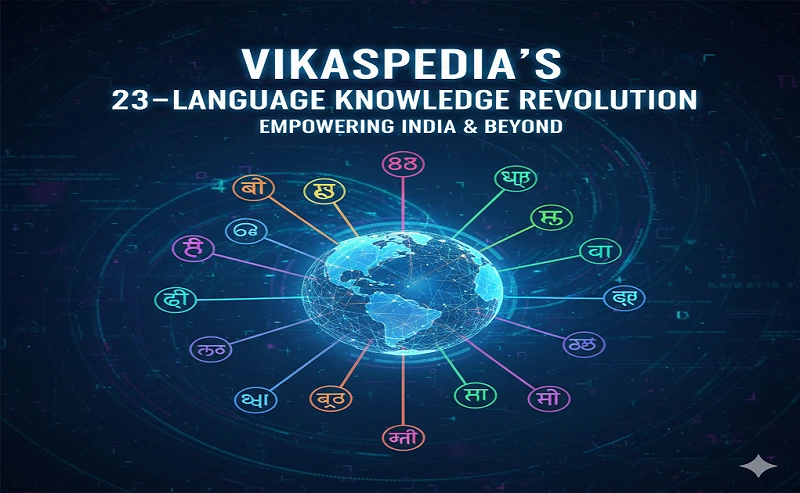
How does Vikaspedia in 23 languages break India’s most persistent accessibility barrier?
Vikaspedia breaks the barrier by giving users dependable, understandable content in their native language—eliminating the English-first problem.
It expands the digital space by offering content in 23 languages including Hindi, Tamil, Telugu, Marathi, Gujarati, Odia, Malayalam, Assamese, Punjabi, and Urdu.
“Which languages does Vikaspedia support?”
Vikaspedia supports 23 official Indian languages to ensure no user is excluded.
Why Language Accessibility Matters for Rural India
Language accessibility is the key to ensuring rural citizens truly understand and use essential information. When resources are available only in English, millions of people are automatically excluded from opportunities in agriculture, healthcare, education, and government schemes.
Providing information in local languages bridges this gap by making knowledge relatable, practical, and easy to act upon. This not only improves digital inclusion but also empowers rural communities to make informed decisions that directly impact their livelihood and quality of life.
Why is local-language digital information essential for rural and non-English-speaking citizens?
Local-language content is essential because it allows people to understand the information they consume; otherwise, access means nothing. In rural India, users often skip online resources simply because they cannot read English.
Here’s what Vikaspedia solves:
- Removes English dependency
- Makes information practical and actionable
- Helps farmers, students, and women’s groups access verified knowledge
- Provides easy explanations and step-by-step guides
- Offers localized examples relevant to each region
“Why is language accessibility important in digital India?”
Because comprehension—not connectivity—is the real challenge for rural Indians.
What Makes Vikaspedia Authoritative, Trustworthy, and E-E-A-T Friendly?
Vikaspedia is authoritative because it delivers information directly backed by Government of India ministries and verified institutions. This official sourcing ensures that every article, guide, and update comes from credible experts, making the platform a reliable destination for accurate and up-to-date public information.
Vikaspedia is trustworthy because its content is reviewed, validated, and aligned with official government guidelines. Users can confidently rely on the platform knowing that it does not publish unverified or user-generated data, reducing misinformation and guaranteeing transparency in every section.
Vikaspedia is E-E-A-T friendly because it showcases real expertise, experience, authority, and trustworthiness across all its knowledge categories. Agriculture resources come from certified specialists, health information follows government health advisories, and scheme details are taken from official notifications—demonstrating consistent expert-driven content.
Vikaspedia strengthens user safety by prioritizing factual accuracy over opinions or speculation. This focus on validated information helps users make important decisions about farming, education, healthcare, and welfare without fear of misleading or incomplete data.
Vikaspedia supports E-E-A-T through its commitment to multilingual accessibility and inclusive knowledge delivery. When citizens receive expert information in their own language, it not only enhances comprehension but also builds confidence—further reinforcing the platform’s trust factor and real-world usefulness.
Why is Vikaspedia considered a high-authority, trustworthy knowledge hub?
Vikaspedia is recognized for its credibility because the information is backed by the Ministry of Electronics & Information Technology (MeitY) and created by domain experts.
It satisfies Google’s E-E-A-T criteria:
E-E-A-T Breakdown
| Factor | How Vikaspedia Demonstrates It |
|---|---|
| Experience | Uses real-world examples and community contributions |
| Expertise | Content curated by subject specialists |
| Authoritativeness | Backed by Government of India (MeitY) |
| Trustworthiness | Regularly updated, fact-checked information |
“Is Vikaspedia reliable for government schemes?”
Yes. It is one of India’s most reliable portals for verified scheme-related information.
How Vikaspedia Empowers Farmers, Students & Rural Communities
Vikaspedia empowers rural India by giving farmers, students, and communities access to practical, locally relevant information in the languages they understand. Farmers get timely guidance on crops, weather, pests, and government schemes, helping them improve productivity and income.
Students benefit from free resources on education, learning materials, and skill development that support their academic growth.
Rural families also gain reliable information on health, nutrition, welfare programs, and digital literacy, enabling smarter decisions in everyday life. By making knowledge accessible to all, Vikaspedia strengthens self-reliance and inclusion across India’s villages.
How does Vikaspedia help real users, especially farmers and students?
Vikaspedia offers simplified, actionable knowledge in agriculture, healthcare, education, and welfare—topics crucial to rural advancement.
A Success Story: Ramesh from Odisha
How did Vikaspedia change a farmer’s life using local-language information?
Ramesh, a paddy farmer from Odisha, struggled to understand English farming tutorials.
When introduced to Vikaspedia’s Odia-language agriculture content, his crop management improved dramatically—he learned early disease detection, low-cost pest control, and subsidy eligibility.
“For the first time, I understood farming advice clearly. In Odia, everything made sense.”
“Can language accessibility improve farming outcomes?”
Yes. Clear instructions help farmers make faster, informed decisions.
How Vikaspedia Supports Education and Skill Development
Vikaspedia strengthens education and skill development by offering students and learners verified resources in their own languages. The platform provides easy access to study materials, digital lessons, vocational guides, and government education initiatives—making learning more inclusive for rural and underserved communities.
By presenting complex topics in simple, understandable language, Vikaspedia helps students grasp concepts faster and stay engaged. It also supports young people preparing for jobs or training programs by offering information on skill development schemes, career pathways, and practical learning tools that build confidence and employability.
How does Vikaspedia help rural students who cannot learn via English resources?
Vikaspedia supports students through local-language materials covering exam preparation, scholarship information, career tips, and e-learning resources. It simplifies complex topics so learners from non-English backgrounds can understand them easily.
“Does Vikaspedia provide educational content in regional languages?”
Absolutely — education is one of its core content pillars.
Vikaspedia’s Role in India’s Digital Inclusion Mission
Vikaspedia plays a crucial role in India’s digital inclusion mission by making verified knowledge accessible in 23 Indian languages. By removing language barriers, the platform ensures that citizens from rural and underserved regions can understand essential information on agriculture, health, education, and welfare programs without depending on English.
This multilingual accessibility directly supports government initiatives aimed at bridging the digital divide and empowering communities with reliable, easy-to-understand digital resources. As more users gain confidence in using online information, Vikaspedia helps accelerate grassroots digital literacy and strengthens India’s broader vision of inclusive digital growth for all.
How does Vikaspedia align with India’s national digital goals?
Vikaspedia supports Digital India, Skill India, Ayushman Bharat, and rural development goals by making digital knowledge inclusive.
How Vikaspedia strengthens digital inclusion:
- Promotes digital literacy
- Provides reliable, misinformation-free content
- Empowers rural users with actionable guides
- Makes government services more accessible
- Bridges the language gap between cities and villages
“How does Vikaspedia contribute to Digital India?”
By ensuring that every citizen—from metros to remote villages—can understand online information.
The Future of Multi-Language Knowledge Platforms in India
The future of multi-language knowledge platforms in India lies in delivering hyper-local, accurate, and accessible information to every citizen, regardless of their literacy level or region. As India continues to digitize rapidly, the demand for knowledge in native languages will grow even stronger.
Rural communities especially rely on local-language content. They need it to understand government schemes, health updates, education resources, and livelihood information.
Emerging technologies like AI translation, voice search, and regional content personalization will make these platforms even more inclusive, allowing users to access trusted information through audio, video, and simple-language formats.
Ultimately, the next phase of India’s digital revolution will depend on how effectively platforms can serve diverse linguistic needs and ensure no citizen is left behind.
Why is Vikaspedia’s 23-language model the future of information accessibility?
The future of digital India depends on language inclusivity, not just internet access.
As voice search, AI tools, and mobile Internet grow, users increasingly prefer searching in their native languages.
“Will multi-language platforms grow in India?”
Yes — and Vikaspedia is leading this shift.
Why does Vikaspedia’s 23-language revolution matter for every Indian?
It matters because it ensures every citizen—regardless of language, literacy, or location—can access reliable knowledge.
By keeping content understandable, inclusive, and government-verified, Vikaspedia empowers millions and sets a new standard for digital accessibility.
Conclusion: Vikaspedia’s 23-Language Knowledge Revolution
Vikaspedia’s 23-language ecosystem is redefining how Indians access reliable and meaningful information. By breaking language barriers and delivering government-backed knowledge in a format people truly understand, it is empowering rural and urban communities alike.
Whether it’s agriculture, health, education, welfare schemes, or everyday guidance, Vikaspedia ensures no citizen is left behind due to language limitations.
As India moves toward deeper digital inclusion, Vikaspedia stands out as a powerful model of accessibility, trust, and local relevance. It is proving that true digital progress happens when knowledge reaches everyone, in every language.
Final takeaway:
Vikaspedia in 23 languages isn’t just a platform — it’s India’s biggest step toward equal, inclusive, and truly accessible digital knowledge.
For detailed information on official government resources, click here.
Frequently Asked Questions
1. What makes Vikaspedia’s 23-language platform a game-changer for digital inclusion in India?
Vikaspedia removes the English barrier by offering verified, government-backed information in 23 Indian languages—helping rural and semi-urban users access essential knowledge effortlessly.
2. How does Vikaspedia help Indian citizens understand government schemes better?
It breaks down complex government schemes into simple, local-language explanations so people can quickly understand eligibility, benefits, and application steps.
3. Why is multilingual content important for India’s digital growth?
Because more than 80% of Indians prefer information in their native language, multilingual knowledge delivery ensures wider accessibility, trust, and engagement.
4. What topics can people learn about on Vikaspedia?
Users can explore agriculture, health, education, nutrition, livelihood skills, and welfare schemes—all curated for practical, daily use.
5. How does Vikaspedia support rural communities specifically?
It provides region-specific, easy-to-understand content tailored to local needs, helping farmers, students, workers, and families make informed decisions.
6. Is Vikaspedia content verified and reliable?
Yes. The platform sources information directly from government ministries, experts, and development organizations to ensure accuracy.
7. Can Vikaspedia help students and educators?
Absolutely. It offers simplified educational materials, e-learning support, and topic-wise guidance in multiple regional languages.
8. How does Vikaspedia improve digital literacy in India?
By delivering knowledge in familiar languages, it encourages first-time internet users to explore, learn, and participate more confidently in the digital world.
9. Is Vikaspedia reliable?
Yes, Vikaspedia is highly reliable because it is developed and maintained by the Government of India, ensuring that all information is accurate, verified, and sourced from official ministries and experts.
10. Who is the founder of Vikaspedia?
Vikaspedia was launched by the Government of India through the National Informatics Centre (NIC) under the Ministry of Electronics & IT (MeitY). It is a government initiative, not a privately founded platform.
11. What is Vikaspedia?
Vikaspedia is India’s multilingual knowledge platform offering verified information on agriculture, health, education, nutrition, livelihoods, and government schemes in 23 Indian languages.